


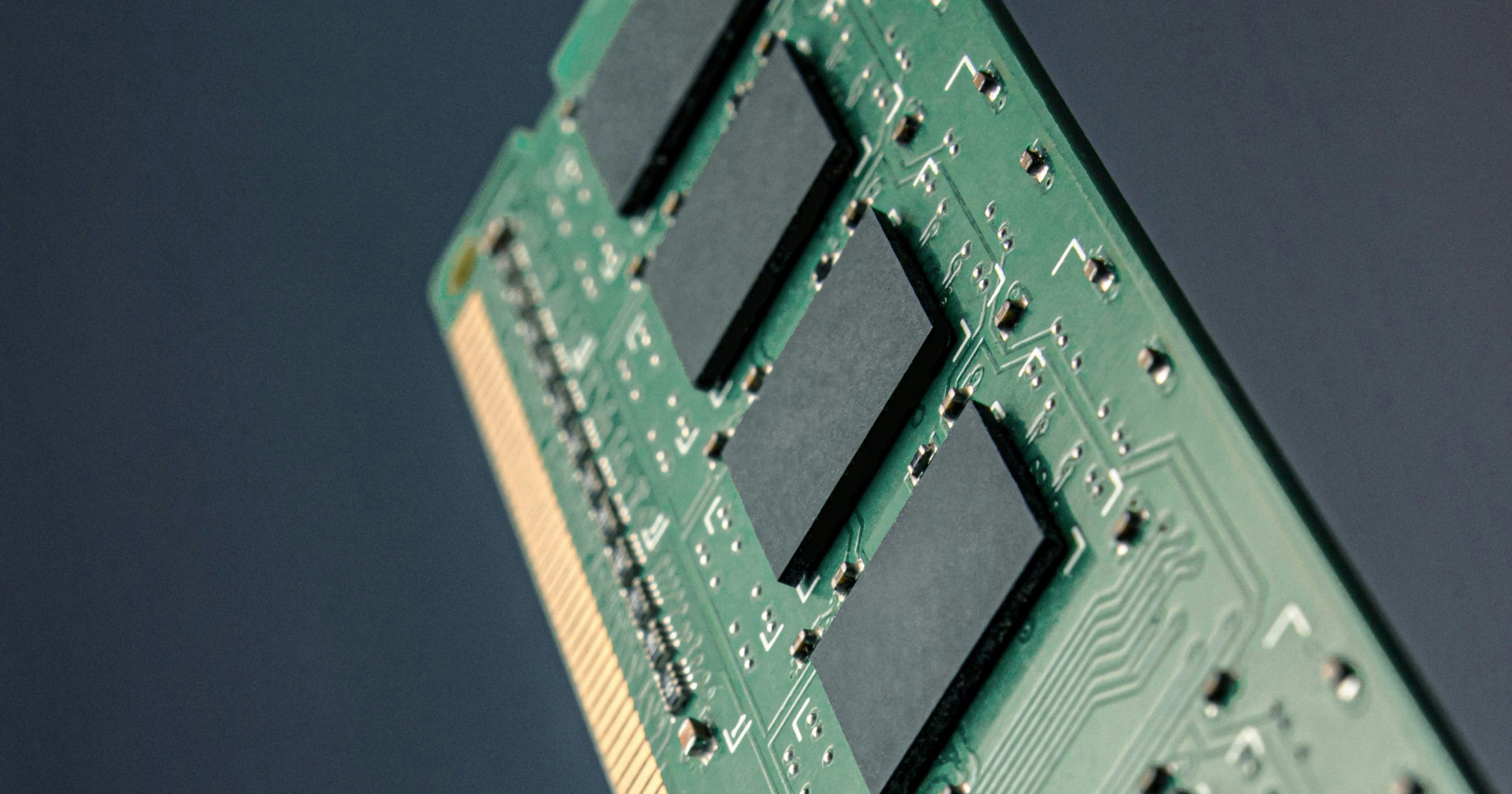
Over the past two months, I have been nerding out over every detail and spec to purchase a gaming PC that performs exceptionally at 1440p resolution. On this journey, a big question that has arisen is whether it is cheaper to buy all the parts myself or to buy a prebuilt system. Thanks to the current state of the United States economy and the overall behavior of big corporations, 32 gigabytes of DDR5 RAM (Random Access Memory) combined with a 2 terabyte SSD (Solid State Drive) can cost 67% of the cost of a top-of-the-line CPU (Central Processing Unit) and GPU (Graphics Processing Unit). Now, this information is anecdotal, of course, but for this article's overall topic, I am using the prices of my current build-in-progress to make the point. My selected Samsung SSD and Corsair RAM are sold on Amazon for a total of $800.59, while AMD’s RYZEN 9800X3D CPU combined with its 9070 XT GPU has an Amazon total of $1,188.99. I understand that I’m new to the PC marketplace, but after consulting a few people for recommendations on parts for this process, they all tell me the same thing: Memory pricing is out of control.
Since I have not been in this shopping environment in any capacity in the past, I think nothing of it. However, as someone in finance, a certain class action lawsuit regarding this problem has seriously caught my eye. Not just for the sake of my job, but also as someone who can’t resist tumbling down an interesting rabbit hole. As I have leaped into this topic headfirst, what I have found is intriguing.Before I take you down the rabbit hole with me, I must disclose that I am not a professional journalist in any way, shape, or form. I am just a guy who enjoys writing articles for our favorite gaming podcast. My closest mentor has taught me to simply care about the truth. I shouldn’t care what the truth is or where it comes from, as long as it’s the truth. This is the standard I hold myself to, and the standard that your trusted hosts hold me to as well.
Memory pricing is out of control.
“Garciaguirre v. Samsung Electronics” is an antitrust class action lawsuit that was filed in Northern California on June 25, 2026. The plaintiffs (those who filed the lawsuit) consist of 14 individual consumers and 3 small computer businesses. The plaintiffs claimed that the defendants (the parties being sued) not only fixed DDR RAM prices to offset losses over the last several years but also conspired in unfair business practices to collectively dictate the market’s overall price point for their own gain. The defendants in this case comprise 3 major corporations and account for over 90% of all DDR RAM production.
Samsung Electronics Co., Ltd. and Samsung Semiconductor, Inc.
SK Hynix Inc. and SK Hynix America Inc.
Micron Technology, Inc.
Over the last 10 years, DDR RAM markets have gone through three major phases. The first took place from 2016 to 2021, when the transition from DDR4 to DDR5 was underway. During this period, markets were booming, consumer spending was high, and the three major corporations were operating at maximum output. Entering the pandemic period in late 2021, consumer spending began to decline dramatically, while these same corporations were operating at normal levels. By the end of 2024, consumer spending hit a steep low, leading to an oversaturated supply, not to mention the unprecedented supply chain and market issues that occurred during the pandemic. During this time, historical numbers show the cost of 32 gigabytes of DDR5 RAM could be as low as $80-$90, compared to over $400 on sites like Amazon today. This leads us from 2025 to the present.
The COVID economy is buttoned up, and the AI race is in full swing. As a result of this technological innovation, the companies have shifted their production priorities to the new HBM (High Bandwidth Memory) design rather than DDR RAM. This shift is solely due to the AI race we’re currently in. HBM meets the performance requirements for proposed AI data centers and offers a significant increase in resources compared to its DDR RAM predecessor. Each gigabyte of HBM requires up to three times the wafer capacity of standard DDR5 memory. Because new fabrication facilities take 2-3 years to build, consumer RAM supply has fallen well short of demand. The last detail I believe is relevant to the change in market pricing is that the Trump administration has threatened a 100% tariff specifically on Samsung and SK Hynix to incentivize them to produce chips in the United States. Both Samsung and SK Hynix are South Korea-based corporations, while Micron Technology avoids this threat, as it is already a U.S.-based company.
Given the current landscape and changes in the tech industry, it is no surprise that these market fluctuations have occurred; nor would it be a real shock if the corporations being sued have used this shortage and new pricing to subsidize the costs of developing new manufacturing methods to satisfy an industry need, at the expense of the average consumer. This theory is not a matter of fact, but will most likely be a point of contention in the lawsuit. The interesting claim the defendants made, which really caught my attention, is that the three corporations conspired to create this price problem to offset losses from previous years.
In my research, I immediately examined company ownership to identify any potential overlap among the three corporations. Samsung Electronics Co. is the parent company of all things Samsung, with the majority of ownership held by the prominent Lee Family. The Lee Family is the most prominent South Korean business dynasty, having controlled Samsung since 1938. SK Hynix Inc is a mess. They are a publicly traded company on the Korea Exchange, with SK Square controlling 20.5% of its outstanding stock. SK Square’s largest shareholder is SK Inc., which owns 32.17% of the company. Finally, SK Inc. is owned by the SK Group, which Chey Tae-won, a South Korean billionaire, wholly owns. Lastly, Micron Technology, Inc. is a publicly traded company on the U.S. exchange, with majority control held by a bevy of large institutional investors and individual executives. The largest pieces of the pie belong to Vanguard Group, BlackRock, and Capital World Investors, with ownership of 9.45%, 8.93%, and 5.17% of the company, respectively. So, with a mess of ownerships spanning different entities, individuals, and time spans, it puzzled me. To think there was a legitimate case to be made, that all these corporations were able to find a common interest and conspire together to set up complete control over an entire industry marketplace. That was until I stumbled upon the following lawsuit, which the United States Department of Justice prosecuted.
The DOJ discovered that between 1999 and 2002, several global DRAM manufacturers engaged in a worldwide price-fixing and market-allocation conspiracy. The companies involved colluded to squeeze DRAM supply and artificially drive up prices for major manufacturers and consumers like Dell, IBM, and Apple. The companies prosecuted were Samsung, Hynix (now SK Hynix), Infineon Technologies, and Elpida Memory. Two of the companies being sued today, Samsung and SK Hynix, were found guilty and ordered to pay hundreds of millions in fines as a result of this investigation. The funniest part to me is that Micron Technology Inc, was also involved and brought up charges from this investigation; however, their charges were dismissed because they “blew the whistle” (the DOJ’s words) on the organized corruption. Make no mistake, Micron Technology was involved in the crime. To recap, you have three companies currently being sued for conspiring to fix prices on DDR RAM, and they have previously been found guilty of such conduct.
Given all this information, it’s fair to say there is reason to be suspicious of the market changes and corporate behavior over the last decade. Currently, the lawsuit is underway, and it will be a matter of time before the details are released. I would be surprised if the accused parties engaged in honest, good-faith business practices, but that’s because I’m too pessimistic. Taking the time to compile all the information I found reinforced strong-held beliefs that are unchanging. Question everything. The unfortunate truth is, when you read anything online or listen to any news story, there is always more than meets the eye. I hope that by the end of reading this article, more of you will seek the truth, no matter what it is or where it comes from.